

Table of contents
Introduction
Building a strong upper body is a top goal for many men who want to enhance their physique, strength, and confidence. A well-designed upper body workout for men doesn’t just improve appearance—it also supports better posture, reduces discomfort, boosts athletic performance, and makes everyday activities easier.

If you’ve ever struggled to lift heavy objects, push open a door, or carry groceries without strain, a stronger upper body can completely transform how you move. This guide covers seven essential upper-body exercises, explaining proper form, key muscle groups, common mistakes, and step-by-step tips.
Whether you want to create a beginner gym workout plan, a dumbbell workout program, a full body dumbbell workout for men, or a structured 5 day workout routine, these exercises will help you build strength safely and effectively. Let’s dive in.
1. Push-Ups: The Foundation of Any Upper Body Workout for Men
Push-ups are one of the most accessible and effective exercises for upper body fitness workouts. They require no equipment, making them perfect for home workouts, gyms, or travel routines. Push-ups target your chest, shoulders, triceps, and core simultaneously.

Why Push-Ups Matter
Push-ups mimic everyday pushing movements like lifting objects or pushing doors. They develop stability, as your entire body must stay tight and aligned throughout the exercise.
When to Use Push-Ups
- Warm-ups for heavy lifting
- Circuit workouts for fat loss
- Conditioning sessions
- Full-body workouts
- Chest-focused training days
Proper Push-Up Form
Form is critical to maximize gains and prevent injury.
Steps:
- Place your hands slightly wider than shoulder-width and begin in the plank posture.
- Create a straight line from your head to your heels by using your legs, glutes, and core.
- Maintain a 45° elbow angle.
- Without drooping hips, lower your chest toward the floor.
- Squeeze your chest while you push through your palms.
- Maintain a neutral neck position.
Tip: Correct form activates the right muscles while protecting wrists and shoulders.
Push-Up Variations
Beginner:
- Knee Push-Ups (reduces load)
- Incline Push-Ups (hands on a bench)
Intermediate:
- Standard Push-Ups
- Diamond Push-Ups (triceps focus)
- Wide Push-Ups (outer chest emphasis)
Advanced:
- Decline Push-Ups (feet elevated)
- Explosive Push-Ups (plyometric power)
- Archer Push-Ups (single-arm strength)
Tip: These variations keep your routine fresh and target different muscle fibers.
How Many Reps Should You Do?
- Muscle Growth: 8–15 reps, 3–4 sets, slow tempo
- Strength Endurance or Fat Loss: 15–25 reps, shorter rest, higher intensity
Tip: Push-ups raise heart rate while building multiple muscles, making them ideal for workout schedules for weight loss.
2. Dumbbell Bench Press: A Core Move in Any Dumbbell Workout Program
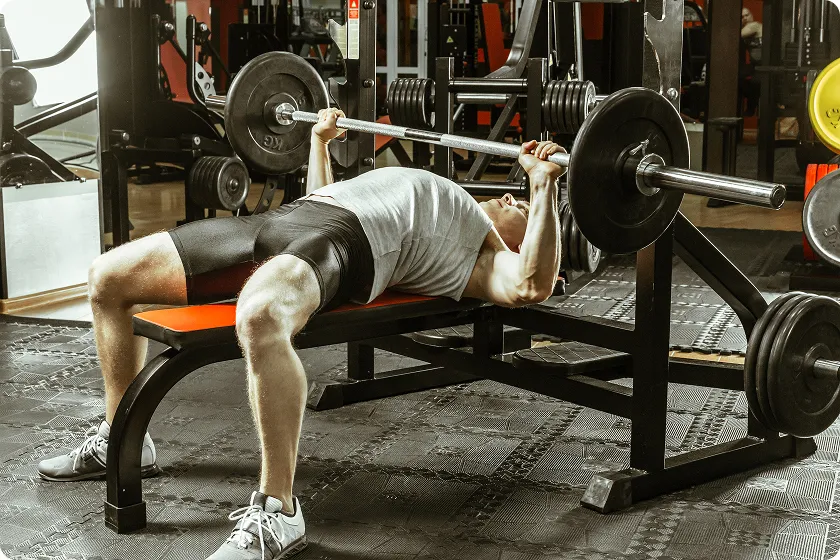
The dumbbell bench press builds chest size and strength. It improves stabilization, corrects imbalances, and is adaptable for both beginners and advanced lifters.
How to Perform the Dumbbell Bench Press
- Lie on a bench with dumbbells close to your chest.
- Feet planted firmly on the floor.
- Lower dumbbells slowly, elbows slightly inward.
- Press upward while squeezing your chest.
- Avoid locking elbows at the top.
Variations for Chest Strength
- Incline Dumbbell Press → Upper chest
- Decline Dumbbell Press → Lower chest
- Neutral-Grip Press → Shoulder-friendly
- Single-Arm Dumbbell Press → Core stabilization
Tip: Rotating these variations weekly encourages consistent growth.
Common Mistakes
- Dropping weights too quickly
- Overarching lower back
- Flaring elbows outward
- Using weights too heavy for proper form
Tip: Controlled, deliberate presses maximize gains safely.
3. Bent-Over Rows: Essential for Back Size and Strength
Bent-over rows develop lats, traps, rhomboids, and rear delts. They improve posture and balance in your chest training.
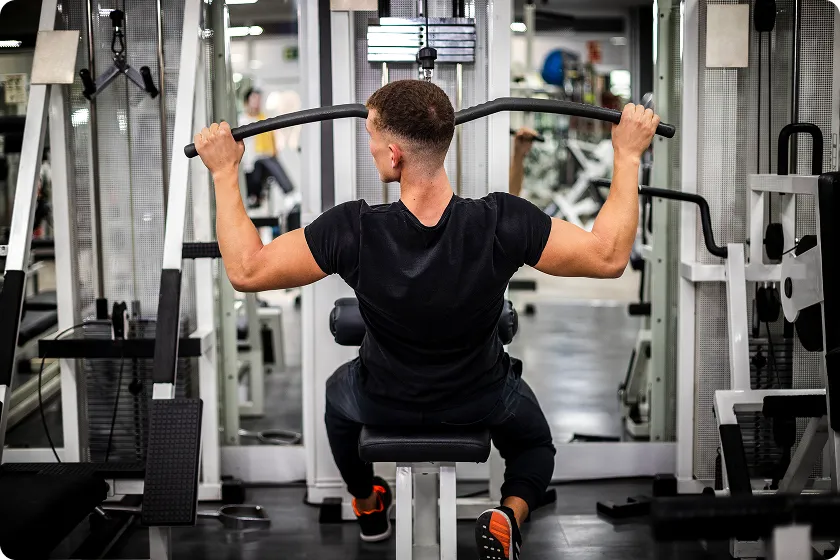
Mastering the Bent-Over Row
- Hinge at hips, torso ~45°
- Slight knee bend, neutral spine
- Pull dumbbells toward ribs, elbows close
- Squeeze shoulder blades together
- Avoid rounding your back
Tip: Focus on the elbows to engage the back muscles fully.
Row Variations
- Single-Arm Dumbbell Row → Unilateral strength
- T-Bar Row → Heavy lifting
- Barbell Bent-Over Row → Strength and size
- Inverted Row → Beginner-friendly
Rowing Safety Tips
- Engage core
- Avoid jerking weights
- Use moderate weights
- Keep neck aligned with spine
4. Overhead Shoulder Press: Build Strength and Stability
Shoulder presses target delts, upper chest, and core. They improve lifting performance and contribute to a broad, strong upper body.

Proper Press Technique
- Seated or standing, dumbbells at shoulder height
- Brace core
- Press upward smoothly, avoiding locking elbows
- Lower weights under control
- Neutral wrist position
Variations for Shoulder Growth
- Arnold Press → All deltoid heads
- Seated Press → Stability
- Standing Press → Core engagement
- Machine Shoulder Press → Beginner-friendly
Common Shoulder Press Errors
- Leaning back excessively
- Using momentum
- Lifting weights too heavy
- Rapid, uncontrolled reps
5. Bicep Curls: Critical for Arm Shape and Definition
Curls build arm definition and complement compound lifts.

Best Curl Technique
- Keep elbows fixed
- Avoid swinging
- Squeeze biceps at the top
- Lower slowly
Curl Variations
- Hammer Curls → Forearms + biceps
- Incline Curls → Long head of biceps
- Concentration Curls → Isolation
- Barbell Curls → Heavier loads
How to Avoid Swinging
Use lighter weights, engage core, and control momentum.
6. Tricep Dips: A Bodyweight Staple for Strength
Dips target triceps and improve shoulder stability.

How to Do Tricep Dips
- Hands shoulder-width apart
- Lower body slowly
- Keep elbows tucked
- Press through palms
Progressions and Regressions
- Beginners → Bench dips
- Advanced → Weighted dips, ring dips
Tricep Activation Tips
- Lean slightly backward
- Keep elbows narrow
- Maintain tension throughout
7. Plank Variations: Core Stability for Upper Body Strength
A strong core stabilizes your upper body during lifts, protecting the spine.
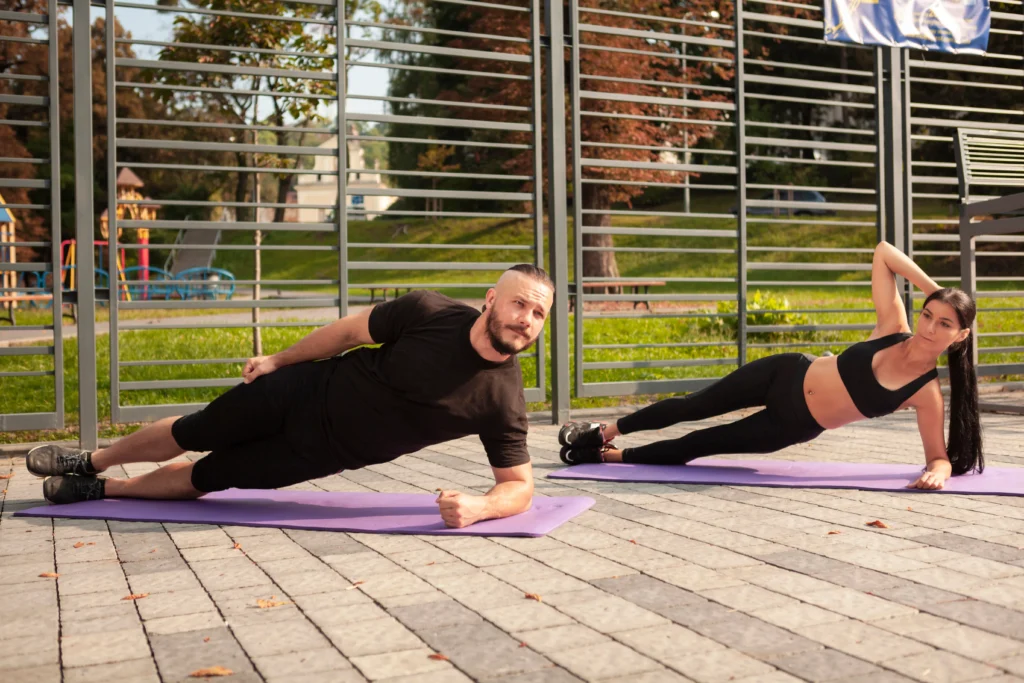
Basic Plank Form
- Elbows under shoulders
- Body straight, core tight
- Neutral neck
Plank Variations
- Side Planks
- Extended Planks
- Plank Walkouts
- Plank Rotations
How Long Should You Hold a Plank?
Start 20–40 seconds, gradually increase while maintaining perfect form.
Training Guide: Weekly Schedule for Strength & Muscle
Sample 5-Day Workout Routine:
- Day 1: Chest + Triceps
- Day 2: Back + Core
- Day 3: Legs
- Day 4: Shoulders + Arms
- Day 5: Full Body
Works well for a workout schedule to build muscle or a full body strength and conditioning workout.
Table: Reps, Sets & Rest Time
The table provides a structured guide for performing the seven essential exercises in an upper-body workout for men. It clearly lists exercise names, recommended sets, repetitions, and rest periods, helping users plan workouts effectively.

For example, push-ups require 3–4 sets of 10–20 reps with 60 seconds rest, while dumbbell bench presses use 3–4 sets of 8–12 reps with 90 seconds rest. The table also includes bent-over rows, shoulder presses, bicep curls, tricep dips, and planks. This layout ensures proper training volume, progressive overload, and optimal recovery for strength and muscle growth.
| Exercise | Sets | Reps | Rest |
| Push-Ups | 3–4 | 10–20 | 60 sec |
| Dumbbell Bench Press | 3–4 | 8–12 | 90 sec |
| Bent-Over Rows | 3–4 | 10–12 | 90 sec |
| Shoulder Press | 3–4 | 8–12 | 90 sec |
| Bicep Curls | 3–4 | 10–15 | 60 sec |
| Tricep Dips | 3–4 | 10–15 | 60 sec |
| Planks | 3 | 20–40 sec | 60 sec |
FAQ
1. What is a good workout routine for building upper-body strength?
A good workout routine for building upper-body strength includes a mix of compound exercises like push-ups, bench press, rows, dips, and overhead presses, along with a few isolation movements to refine muscle balance. A strong routine targets the chest, back, shoulders, biceps, and triceps at least twice per week. Beginners can start with a full body dumbbell workout for men, while intermediate lifters may follow a 3 day workout split or 5 day workout routine that distributes muscle groups across the week for better recovery.
2. How to create a workout plan if I’m a complete beginner?
If you’re brand new to strength training, start by choosing 6–8 basic exercises that work the entire body. Your **beginner gym workout plan** should include movements like squats, rows, chest presses, hip hinges, and shoulder presses. Aim for 2–3 sessions per week to allow the muscles to adapt safely. Focus on learning proper form using lighter weights to avoid unnecessary strain. Once your technique improves, gradually increase intensity. You can eventually transition to a structured workout schedule to build muscle once your base strength improves.
3. How to build a workout plan that fits my goals and schedule?
Start by defining your primary goal: muscle gain, fat loss, increased fitness, or athletic performance. Then determine how many days per week you can train. For example, if you train 3 days weekly, a full body strength and conditioning workout works best. If you can train 5–6 days, a 5-day workout routine or a 6-day gym workout schedule is ideal. Select compound exercises as the foundation, add 2–3 accessory lifts, and plan progressive overload. Remember to include rest days and mobility time to prevent burnout.
4. How to make a workout plan to build muscle mass effectively?
To build noticeable muscle mass, choose exercises that target major muscle groups, and follow a structured bodybuilding program. Prioritize heavy compound lifts such as bench presses, rows, weighted dips, shoulder presses, and deadlifts. These stimulate greater hormonal responses and recruit more muscle fibers. Train each muscle group 2 times per week with moderate to high volume. Use progressive overload—gradually increasing reps, weight, or sets—to continually challenge the muscles. Adequate protein intake, sleep, and recovery days are essential parts of the plan.
5. What’s the best exercise workout plan to lose weight safely?
A balanced workout plan for weight loss combines strength training with moderate-intensity cardio. Strength training builds muscle mass, which naturally increases metabolism. Choose full-body or circuit workout routines that raise heart rate while targeting multiple muscles. Include exercises like push-ups, dumbbell squats, rows, and overhead presses. Add 20–30 minutes of walking, jogging, or cycling 3–4 times weekly. The key is consistency and incorporating healthy nutrition. Avoid excessive cardio without strength training, as it may lead to muscle loss and slower metabolism.
6. How often should men follow an upper body workout routine each week?
Most men benefit from performing an upper body workout for men at least twice per week. This allows enough stimulus for muscle growth while providing the recovery required for strength gains. If you follow a 5 day workout routine, upper-body training days can be split into pushing and pulling movements. Advanced lifters following a 6 day gym workout schedule may train upper body 3 times weekly using varying intensities. Always listen to your body — sharp pain, soreness that lasts more than 3–4 days, or fatigue means you need more rest.
Conclusion
Building a stronger upper body doesn’t require complicated exercises—just commitment and the right movements. These seven exercises form the backbone of an effective upper body workout for men, supporting goals like muscle growth, fat loss, and improved confidence. Whether you’re following a dumbbell workout program, a beginner gym workout plan, or a full-body dumbbell workout for men, these exercises give you the foundation you need.
Consistency is key. By regularly performing a well-structured upper body workout for men, you’ll gradually increase strength, enhance posture, and improve your overall physical performance. Focus on proper form, controlled movements, and progressive overload to see the best results without risking injury.
Remember, an effective upper body workout for men is more than just building visible muscles—it’s about creating functional strength that improves everyday life. From lifting groceries to performing sports activities, a stronger upper body helps you move efficiently and confidently. Pair your workouts with adequate nutrition, rest, and hydration to maximize results and maintain long-term fitness. With dedication and patience, this upper body workout for men can transform your physique, boost your self-esteem, and set the stage for a healthier, more active lifestyle. Start today, track your progress, and watch your strength and confidence grow over time.
Internal Links:
- Smart Metabolism Tracking Devices in 2025
- Exercise & Fitness Guide 2025: Routines & Trends
- Daily Exercise Routine: 7 Full Body Workouts at Home