

Table of contents

Introduction
Seeing a high non-HDL cholesterol result on a blood test can feel alarming, especially if you feel perfectly fine. That is part of the difficulty with cholesterol: it often causes no obvious symptoms, so a routine lipid panel may be the first sign that your risk needs attention. Non-HDL cholesterol is the cholesterol carried by all particles that are not HDL, including LDL, VLDL, and other plaque-forming particles, which is why it can provide a broader view of risk than LDL alone.
The reassuring part is that a high result is not a final verdict. Once you understand what non-HDL cholesterol in blood test reports is, how the non-HDL cholesterol calculation works and what a realistic non-HDL cholesterol healthy range looks like for you, the next step becomes much easier to plan. Many people improve their numbers with steady lifestyle changes, and some also need medicines plus repeat testing to track progress properly.
This guide explains what high non-HDL cholesterol means, how to calculate non-HDL cholesterol, what a good level for non-HDL cholesterol is, and the five proven actions that matter most when elevated non-HDL cholesterol appears on your report. The aim is simple: help you understand the number, act early and know what to discuss at your next review.
Why a high result matters
A high number matters because non-HDL cholesterol reflects the cholesterol carried by particles most closely linked to plaque build-up in arteries. It is also practical because it is part of a routine lipid panel and, in most cases, fasting is not required. That makes it useful for both day-to-day clinical care and longer-term follow-up.

It counts more than LDL alone.
LDL is only one part of the picture. Non-HDL cholesterol includes LDL, VLDL, and other atherogenic particles, so it can capture risk that LDL alone may miss. This is one reason clinicians often look closely at non-HDL cholesterol numbers when triglycerides, weight, or blood sugar are also part of the story.
High results are usually silent.
Most people do not feel any different when non-HDL cholesterol is high. A raised result is usually found on a routine non-HDL cholesterol blood test rather than because symptoms appeared. That is why acting early matters: the number may be giving you a warning before any heart or stroke problem develops.
Higher numbers usually mean higher risk.
When more plaque-forming cholesterol is circulating in the blood, cardiovascular risk usually rises over time. Reviews and meta-analyses consistently show that non-HDL cholesterol is a meaningful risk marker and that lowering it tracks with better coronary outcomes. In plain English, a higher result usually means more cholesterol is available to contribute to artery narrowing.
How to understand your numbers
Before trying to fix the result, make sure you know how the lab arrived at it and which target actually applies to you. A good number for a low-risk adult is not always the right target for someone with diabetes, a past heart attack or a very strong family history. The units matter too, because UK reports often use mmol/L while some lab guides use mg/dL.
What is non-HDL cholesterol on blood test reports?
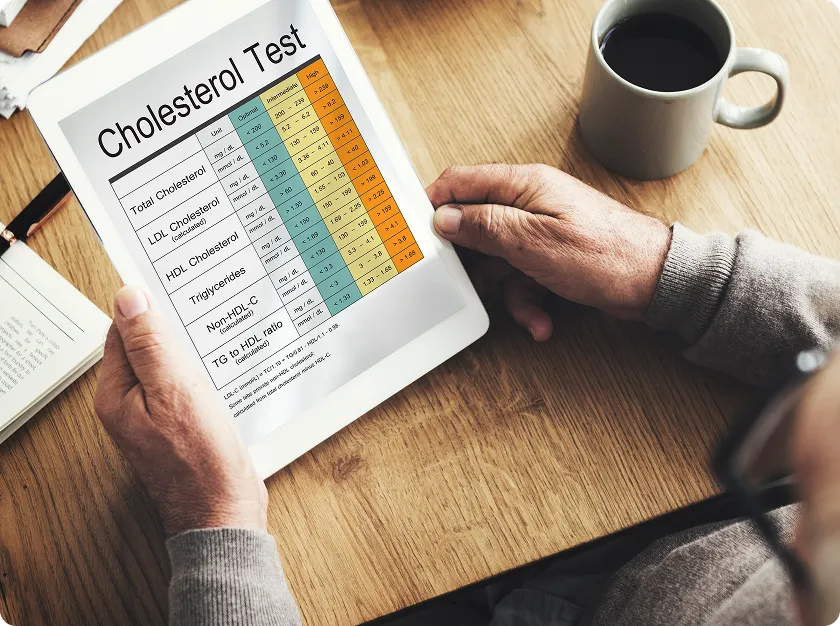
On a full lipid panel, total cholesterol, HDL cholesterol and triglycerides are measured first. Your non-HDL cholesterol is then calculated from the same panel, so it is not usually a separate specialist test. This is why the non-HDL cholesterol blood test is so practical in routine care: it is simple, widely available, and easy to repeat.
How to calculate non-HDL cholesterol
The formula for non-HDL cholesterol is straightforward: total cholesterol minus HDL cholesterol. Your non-HDL result is 4.4 mmol/L if your total cholesterol is 5.8 mmol/L and your HDL is 1.4 mmol/L. Your non-HDL result is 120 mg/dL if your HDL is 60 mg/dL and your total cholesterol is 180 mg/dL.
Table: Example of the non-HDL cholesterol calculation.
| 5.8 | 1.4 | 5.8-1.4 | 4.4 |
| 180 | 60 | 180-60 | 120 |
What is a good level for non-HDL cholesterol?
If you are wondering what a good level for non-HDL cholesterol is, the answer depends on your risk. A general UK guide for healthy adults is below 4.0 mmol/L, while many lab reports use below 130 mg/dL as a healthy adult level. If you already have cardiovascular disease, lower targets are used, and if the result is very high, specialist assessment may be needed.
| Healthy adult | <4.0 mmol/L |
| Common lab | <130 mg/dL |
| On treatment | >40% drop |
| CVD history | ≤2.6 mmol/L |
| Specialist review | >7.5 mmol/L |
Five proven ways to manage it
If non-HDL cholesterol is high, the goal is steady improvement rather than a perfect number next week. The best plan usually combines daily habits with sensible follow-up and, for some people, prescribed treatment. These five actions are practical, evidence-based and realistic enough to use in everyday life.

1. Swap saturated fat for healthier fats
Start with the foods you eat most often. Replacing butter, cream, fatty meat and pastries with olive or rapeseed oil, nuts, seeds, fish, and higher-fibre staples is one of the clearest dietary steps for better cholesterol control. A simple example is swapping a fried breakfast for porridge with fruit, or using olive oil instead of butter when cooking.
2. Add more fibre and whole foods
Fibre, particularly soluble fibre from fruits, vegetables, beans, lentils, and oats, aids in the management of cholesterol. Foods like muesli, beans, avocados, oils, and nuts are highlighted in public health guidelines. According to earlier therapeutic lifestyle guidelines, consuming 5 to 10 grams of soluble fibre daily can reduce LDL by roughly 5%. In reality, it’s simple to start with one bowl of oats and one bean dish each day.
3. Move more and manage weight
Frequent exercise improves cholesterol balance and facilitates weight management. If you are currently inactive, begin with brisk walking, cycling, or swimming and gradually increase your activity to at least 150 minutes of moderate activity or 75 minutes of strenuous activity per week. If being overweight is one of the reasons your non-HDL cholesterol is high, losing even a small amount of extra weight can help.
4. Stop smoking and go easy on alcohol
Smoking damages blood vessels and makes them more likely to collect fatty deposits, so stopping is one of the most useful heart-health changes you can make. Alcohol can also push cholesterol and triglycerides in the wrong direction when intake is high. A practical rule is to stay within UK guidance, spread drinks across the week and build in drink-free days.
5. Review medicines and retest
If lifestyle changes are not enough, review the result with your GP or nurse instead of guessing. For many higher-risk adults, statins are the main medicine used to lower cholesterol; other options can include ezetimibe, sometimes with bempedoic acid, or injectable treatments such as alirocumab, evolocumab and inclisiran. After treatment starts or changes, repeat testing helps show whether you are moving towards your target; in routine practice, that check is usually done at 2 to 3 months.
FAQ
1. What does high non-HDL cholesterol mean?
If you are asking what high non-HDL cholesterol means, it usually indicates that there is too much cholesterol circulating in LDL, VLDL, and related particles, which can build up in arterial walls and form plaque. The practical next step is to look at your full non-HDL cholesterol numbers alongside blood pressure, weight, smoking, diabetes, and family history, because overall cardiovascular risk matters more than a single isolated result.
2. How do you calculate non-HDL cholesterol?
To answer how you calculate non-HDL cholesterol, use the non-HDL cholesterol formula from your lipid panel: total cholesterol minus HDL cholesterol. You do not need a separate calculator if the report already lists the total and HDL. If the value is missing, subtract the HDL yourself, then discuss the result in the same units shown on the report.
3. What is a good level for non-HDL cholesterol?
What is a good level for non-HDL cholesterol depends on the context. For many healthy adults, non-HDL cholesterol is considered normal when it is below 4.0 mmol/L in the UK or below 130 mg/dL on many lab reports. If you already have cardiovascular disease or a very high overall risk, your clinician may set a lower target and focus on how far the number falls after treatment begins.
4. Is the non-HDL cholesterol blood test different from a standard lipid test?
Usually no. A non-HDL cholesterol blood test is normally part of the same lipid panel that measures total cholesterol, HDL cholesterol, and triglycerides. In other words, when people ask what non-HDL cholesterol is on their blood test results, they are usually referring to a value calculated from a standard panel rather than a separate specialist test.
Conclusion
A high non-HDL cholesterol result is a prompt to act early, not a reason to panic. Once you understand the non-HDL cholesterol calculation, what elevated non-HDL cholesterol means. What a realistic, non-HDL cholesterol healthy range looks like for your level of risk, and how you can make steady progress. Start with food swaps, fibre, movement, weight, smoking and alcohol habits, then review whether you also need treatment and a repeat test.
Internal Links
- 5 Proven Magnesium Glycinate Benefits for Women’s Health and Wellness
- 7 Essential Ketovore Diet Tips for Keto Success
- 10 High Fiber Dinner Ideas for a Healthier Family
External Links
Reference
(2009). Self-Reported Prediabetes and Risk-Reduction Activities—United States, 2006. JAMA. https://doi.org/10.1001/jama.301.6.591