

✍️ Written By: Healthy Eats Guide Team — Health & Nutrition Specialist
🩺 Medically Reviewed By: Doctor Imran Hameed
📅 Updated: August 2026 | ✅ Fact-Checked & Evidence-Based

Introduction
Do you exercise for a few days, feel sore, and then quit because the routine seems too difficult? A realistic workout plan to lose weight should fit your schedule, gradually improve your fitness, and combine calorie-burning movement with muscle-building work.
The best workout routines for weight loss are not based on one “magic” exercise. They use manageable sessions that you can repeat on a weekly basis. This guide explains eight effective exercises, how to organize them, and how to make your routine easier to maintain.
Safety note: Start slowly if you are currently inactive. Speak with a healthcare professional before exercising if you have an injury, a chronic condition, pregnancy, chest pain, or dizziness. Children and teens should follow a family- and clinician-guided approach rather than an aggressive adult weight-loss program.
Why a Balanced Weight-Loss Training Plan Works

A useful weight-loss training plan increases the amount of energy your body uses while helping you maintain strength and daily function. Learning how to lose weight with a workout plan also involves combining exercise with a nutritious diet, adequate sleep, and effective stress management.
Physical activity and reduced calorie intake create the calorie deficit needed for weight loss. Regular activity also plays an important role in preventing weight regain. Adults should generally work toward 150–300 minutes of moderate aerobic activity each week, along with muscle-strengthening exercise on at least two days.
Create a Sustainable Calorie Deficit
Exercise supports fat loss, but it cannot reliably cancel out uncontrolled eating. Build meals around vegetables, fruit, protein-rich foods, whole grains, and suitable portions. Then use movement to increase your daily energy expenditure.
Healthy weight management also depends on sleep, stress, medical conditions, medicines, hormones, and age. The CDC reports that gradual weight loss of around one to two pounds per week is more likely to be maintained than rapid weight loss.
Combine Cardio and Resistance Training
A cardio workout program for weight loss improves stamina and increases calorie-burning activity. Resistance exercise supports muscular strength and helps make your routine more balanced.
The American College of Sports Medicine emphasizes consistency instead of complicated programming. As researcher Stuart Phillips explains, “The best resistance training program is the one you’ll actually stick with.”
Choose the Right Number of Exercises
Wondering how many exercises to do per workout? Most beginners can use five to eight movements that cover the legs, hips, pushing muscles, pulling muscles, core, and cardio.
Start with one to three sets of each strength exercise. Focus on controlled technique before adding heavier resistance, more repetitions, or longer workouts. Training the major muscle groups consistently matters more than chasing a perfect or overly complex routine.
Table 1. Example Weekly Workout Plan to Lose Weight
| Day | Main Session | Suggested Duration |
|---|---|---|
| Monday | Full-body strength and walking | 35–50 minutes |
| Tuesday | Brisk walking or cycling | 25–40 minutes |
| Wednesday | Recovery walk and mobility | 15–30 minutes |
| Thursday | Full-body strength and intervals | 35–50 minutes |
| Friday | Brisk walking or cycling | 25–40 minutes |
| Saturday | Longer enjoyable activity | 40–60 minutes |
| Sunday | Rest or gentle movement | As comfortable |
8 Effective Workout Exercises for Weight Loss
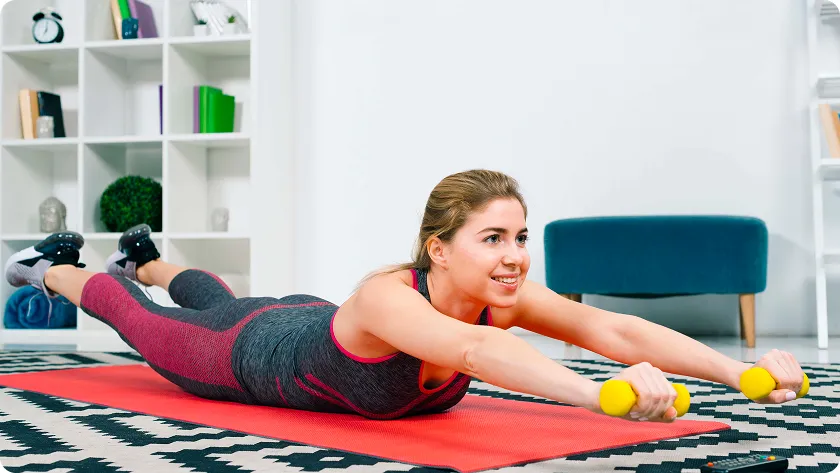
The following weight-loss exercises can be adapted for use at home or in the gym. When deciding how many different exercises to perform per workout, select five to eight based on your fitness level and available time.
Begin with a five-minute warm-up and keep your effort challenging but controlled. Stop exercising if you experience sharp pain, faintness, chest discomfort, or unusual shortness of breath. These eight exercises can form the foundation of a practical fat-burning fitness program.
1. Brisk Walking
Brisk walking is affordable, accessible, and easy to add to most schedules. Walk at a pace that makes your breathing faster while still allowing you to speak in short sentences.
Begin with 20–30 minutes and gradually add time, distance, or gentle hills. Walking is also useful on recovery days between strength workouts.
2. Stationary or Outdoor Cycling
A stationary or outdoor exercise bike provides an effective aerobic workout. You can cycle outdoors, use a stationary bike, or follow a guided indoor cycling session.
Pedal steadily for 20–40 minutes. Another option is to alternate one faster minute with two easier minutes. Adjust the seat so your knee remains slightly bent at the bottom of each pedal stroke.
3. Squats
Squats target the thighs, hips, and glutes, making them useful for fat-loss bodyweight workouts. They also imitate everyday movements such as sitting down and standing up.
Push your hips backward as though lowering onto a chair. Keep your knees aligned with your toes and your Chest lifted. Perform 8–15 controlled repetitions.
4. Push-Ups
Push-ups strengthen the Chest, shoulders, arms, and core. They can also be modified for different ability levels, making them suitable for many beginners.
Start with wall or bench push-ups if floor push-ups are too difficult. Perform 6–12 smooth repetitions while keeping your head, hips, and back in a controlled line.
5. Rows
Rows train the upper back and arms while balancing exercises that push the body away from the floor or wall. You can perform them with resistance bands, dumbbells, cables, or gym machines.
Pull your elbows toward your ribs without lifting your shoulders toward your ears. Pause briefly before returning to the starting position. Aim for 8–15 repetitions.
6. Reverse Lunges or Step-Ups
Lunges and step-ups train each leg separately and challenge coordination and balance. Choose the version that feels more comfortable for your knees and current fitness level.
For lunges, step backward and lower only as far as you can control. For step-ups, use a stable, low platform. Perform 6–12 repetitions on each side while holding support when necessary.
7. Hip Hinges or Romanian Deadlifts
Hip hinges train the glutes, hamstrings, and muscles along the back of the body. They are an important movement to learn before using heavier dumbbells or barbells.
Push your hips backward while maintaining a neutral spine. Squeeze your glutes as you return to standing. This exercise supports fat loss through weightlifting because it engages several large muscle groups.
8. Low-Impact Intervals
Intervals alternate harder periods of movement with easier recovery periods. This allows you to increase workout intensity without making the entire session exhausting.
Try 30 seconds of faster marching, cycling, or step-ups followed by 60–90 seconds at an easy pace. Repeat the pattern six to ten times. Beginners should develop a base of steady aerobic activity before attempting demanding intervals.
Table 2. Beginner Targets for the Eight Workout Exercises
| Exercise | Main Focus | Beginner Target |
|---|---|---|
| Brisk walking | Cardio and daily movement | 20–30 minutes |
| Cycling | Low-impact cardio | 20–40 minutes |
| Squat | Legs and hips | 1–3 sets of 8–15 |
| Push-up | Chest, shoulders, and core | 1–3 sets of 6–12 |
| Row | Back and arms | 1–3 sets of 8–15 |
| Lunge or step-up | Legs and balance | 1–3 sets of 6–12 per side |
| Hip hinge | Glutes and hamstrings | 1–3 sets of 8–12 |
| Intervals | Cardiovascular intensity | 6–10 work rounds |
Supportive Habits That Make the Plan Easier

Even a well-designed weight-loss workout may fail if it is too inconvenient to repeat. Knowing how to incorporate gym workouts into your daily routine turns exercise from an occasional project into a normal habit.
Schedule short sessions, prepare your clothes beforehand, and choose activities you can keep up during busy weeks. A workout plan to lose weight becomes more sustainable when it works with your lifestyle instead of competing against it. Federal guidelines summarize this approach with the advice to “move more and sit less.”
Attach Exercise to an Existing Habit
Train immediately after an event that already happens each day. Examples include waking up, finishing work, taking children to school, or returning home from university.
Keep a short backup workout for days when the complete session is impossible. Even short walks contribute to your overall weekly activity, since exercise no longer needs to be performed in continuous 10-minute blocks to provide benefits.
Progress One Variable at a Time
Increase either workout duration, repetitions, sets, resistance, or pace—not everything together. This gives your muscles and joints time to adapt.
For example, add five minutes to your cycling session or one to two repetitions to each strength set. When the highest repetition target feels controlled, slightly increase the resistance.
Track More Than Body Weight
Record your workouts, waist measurements, walking pace, strength, energy, and sleep. Body weight may fluctuate because of water, food, digestion, and hormonal changes.
Judge your progress over several weeks rather than reacting to a single measurement. Better stamina, increased strength, improved exercise technique, and greater consistency are also meaningful results.
FAQ
1. How many exercises per workout are best for beginners?
Most beginners do well with five to eight exercises covering the major movement patterns. Start with fewer exercises while learning proper technique, then add volume when your recovery remains good.
2. How many steps in 30 minutes?
At approximately 100 steps per minute, 30 minutes of walking equals roughly 3,000 steps. Actual totals vary according to stride length, speed, terrain, age, and fitness.
3. Is weight lifting for fat loss female-friendly??
Yes, Weightlifting programs for female fat loss can improve strength and help preserve lean tissue. Use suitable resistance, learn proper form, and combine lifting with cardio and balanced nutrition.
4. Can fat-loss body weight workouts replace the gym?
Bodyweight workouts can provide effective beginner training through squats, lunges, push-ups, band rows, and intervals. Progress by adding repetitions, slowing each movement, reducing assistance, or using resistance bands.
5. How often should I use an exercise cycle for weight loss?
Begin with two to four cycling sessions per week, usually lasting 20–40 minutes. Mix comfortable, steady rides with occasional intervals, and schedule easier days when your legs feel unusually sore.
Conclusion
A successful workout plan to lose weight combines repeatable cardio, full-body strength work, gradual progression, and supportive daily habits. Walking, cycling, squats, push-ups, rows, lunges, hip hinges, and intervals create flexible workout routines for weight loss that can be performed at home or in a gym.
Start at your current fitness level and track several signs of improvement. Adjust your weight-loss training plan as needed, rather than abandoning it after one difficult workout or an unusually busy week. Choose your first three workout days now, save this guide, and share it with someone who needs a practical workout plan to lose weight.
Internal Links
- 10 Essential Weekly Workout Plan for Men Tips
- 8 Effective Bodyweight Exercises to Tone Your Body
- 7 Proven Ways to Stay Active Throughout the Day
External Links
References
- NJ Personal Trainer, Joe D’Angelo delivers results. Offering fitness training throughout Northern New Jersey.. http://www.njpersonaltraining.com/
- Top 5 Exercises to Support Joint Health at Any Age – Accelerated Urgent Care. https://acceleratedurgentcare.com/2025/02/01/top-5-exercises-to-support-joint-health-at-any-age/
- Smith Machine Leg Press – Easy Reps. https://easyreps.app/exercises/smith_machine_leg_press
- All in the Hinge – Magic City Pelvic Floor Physical Therapy. https://magiccitypt.com/all-in-the-hinge/