

Table of contents

Introduction
Allergies are a daily struggle for millions worldwide. From seasonal hay fever and dust mite sensitivities to pet dander and mold, the burden of constant sneezing, itching, and watery eyes can severely impact quality of life. Traditional medications, antihistamines, nasal sprays, and inhalers mainly mask symptoms rather than address the root cause. Sublingual immunotherapy (SLIT) offers a modern, convenient alternative: small doses of allergen extracts placed under the tongue daily train the immune system to tolerate allergens over time. This needle-free approach is endorsed by the World Health Organization and leading allergy societies, including the EAACI and AAAA, and is supported by the EAACI Guidelines on Allergen Immunotherapy.
This article details the 7 essential allergy drops, their indications, evidence for efficacy, dosing strategies, and safety considerations. It also compares SLIT with traditional allergy shots, guiding patients and caregivers toward informed choices.
Why Sublingual Drops Matter
Allergic rhinitis and asthma affect roughly 20% of the population globally. Pollens, dust mites, pet dander, and molds trigger immune reactions that can disrupt sleep, work, school, and outdoor activities. SLIT addresses the root immunological cause by gradually reducing hypersensitivity. Studies consistently show that 3–5 years of continuous SLIT or allergy shots lead to long-term improvement and even prevention of new allergies.
Unlike shots, which require weekly or biweekly clinic visits during build-up and monthly maintenance, SLIT is home-administered daily. Drops are placed under the tongue for 2–3 minutes before swallowing. Mild oral itching or tingling may occur initially, but serious systemic reactions are extremely rare. SLIT is particularly appealing for children, needle-averse patients, and busy adults seeking convenient treatment.
Shots vs. Drops
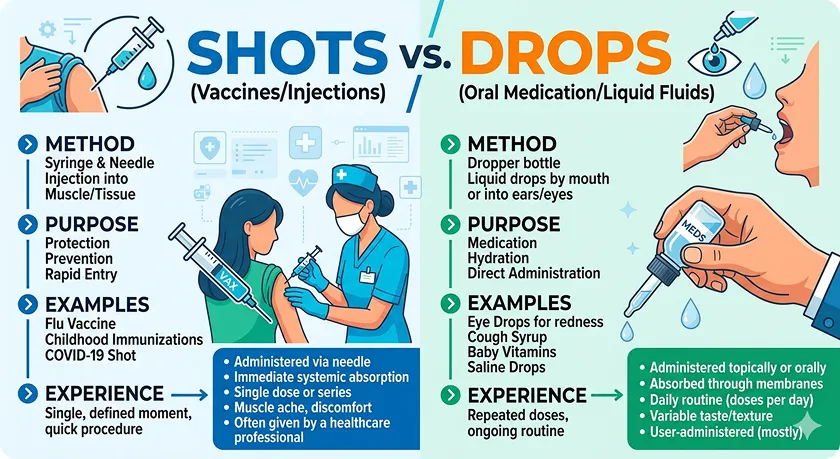
| Feature | Allergy Shots (SCIT) | Sublingual Drops (SLIT) |
|---|---|---|
| Delivery | Injection under the skin | Allergen extract under the tongue daily |
| Setting | Clinic-administered | Self-administered at home |
| Schedule | Weekly build-up; maintenance every 2–4 weeks for 3–5 years | Daily dosing after a short build-up; no regular clinic visits needed |
| Allergens Covered | Broad: pollens, dust mites, pets, insect stings, molds | Pollens (grass, ragweed, trees), dust mites, pet dander, molds |
| Efficacy | Highly effective; may produce slightly stronger immune responses | Effective and comparable in long-term symptom reduction |
| Side Effects | Injection site reactions; rare risk of anaphylaxis | Mild oral itching, GI upset; systemic reactions are rare |
| Insurance Coverage | Often covered by insurance plans | FDA-approved tablets may be covered; custom drops are usually out-of-pocket |
| Key Advantage | Broad allergen coverage and strong clinical effectiveness | Convenience, fewer clinic visits, and improved adherence |
Note: SLIT is nearly as effective as SCIT for allergic rhinitis and asthma, while offering greater convenience and fewer clinic visits.
7 Essential Sublingual Allergy Drops
Below are the most commonly used SLIT formulations:
1. Grass Pollen (5-Grass Mix: Oralair, Grazax)
Grass pollen, including timothy, rye, and orchard grass, is a leading seasonal allergen. Oralair and Grazax tablets are taken daily starting 3–4 months before pollen season and continued through summer.
- Evidence: Meta-analyses show reductions of 50–70% in symptom scores and medication use. Long-term use (3–4 years) can prevent the development of new allergies.
- Side Effects: Mouth/lingual itching, mild nausea.
- Tip: Take consistently at the same time each day; avoid food/drink 15 minutes before/after.
2. Tree Pollen (Birch/Oak/Cedar)
SLIT tablets or custom drops treat birch, oak, and cedar pollen.
- Evidence: Randomized trials show a significant reduction in rhinitis and conjunctivitis symptoms. Pre-season start (January–February) improves efficacy.
- Side Effects: Mild oral irritation; rare GI upset.
- Tip: Confirm allergen sensitivity with skin/blood tests before starting.
3. Ragweed & Weed Pollen (Ragwitek)
Ragweed is a late-summer allergen. Ragwitek tablets are taken daily, ~12 weeks before the season.
- Evidence: 40–50% reduction in symptom scores; fewer rescue meds required.
- Side Effects: Oral itching, throat irritation, mild cough.
- Tip: Carry epinephrine if there is a history of severe reactions.
4. House Dust Mite (HDM: Acarizax)
Year-round allergens are found in bedding and carpets.
- Evidence: Reduces rhinitis and asthma exacerbations by ~30%; improves nasal symptoms over placebo.
- Side Effects: Oral irritation, mild nausea, occasional throat swelling.
- Tip: Combine with environmental control: dust-proof covers, HEPA filters.
5. Cat Dander (Fel d 1 Extract)
Custom SLIT drops for cat allergies.
- Evidence: Trials report 50–60% symptom improvement with sustained exposure; high safety profile.
- Side Effects: Oral itching; rare eye redness or mild wheezing.
- Tip: Start first dose in clinic; maintain environmental control (keep cats out of bedroom).
6. Dog Dander (Can f 1 Extract)
Off-label custom SLIT drops for dog allergies.
- Evidence: Limited but analogous to cat SLIT; gradual symptom relief over months.
- Side Effects: Mild oral irritation; systemic reactions are rare.
- Tip: Multi-allergen drops may be considered if allergic to multiple pets.
7. Mold & Fungi (Alternaria, Aspergillus)
Custom SLIT drops for indoor/outdoor molds.
- Evidence: Limited trials, but effective for patients with dominant mold allergy. Works best with humidity control and mold mitigation.
- Side Effects: Oral itching; asthma exacerbations are possible if uncontrolled.
- Tip: Start before peak mold season; maintain environmental controls.
Tips for Successful SLIT

- Daily Consistency: Set a routine; missing more than a day or two reduces efficacy.
- First-Dose Safety: Initial dose taken under supervision to monitor rare systemic reactions.
- Complementary Medications: Antihistamines or inhalers may be continued during early therapy.
- Environmental Measures: Reduce allergen exposure. Close windows on high-pollen days, use HEPA filters, and use allergen-proof bedding.
- Monitoring: Follow up with the allergist every 3–6 months; track progress in a symptom diary.
FAQs
1. How long until SLIT works?
Many notice improvement within 3–4 months; full benefit usually by 1–2 years.
2. How long is treatment?
Recommended 3–5 years for long-term remission.
3. Are SLIT drops safe for children?
Yes, with caregiver supervision. Mild oral irritation is common; serious reactions are rare.
4. Can you switch from shots to drops?
Yes, some patients do combination therapy for convenience.
Conclusion
Sublingual allergy drops offer a safe, effective, and convenient alternative to traditional allergy shots. The 7 essential SLIT formulations. Grass, tree, ragweed, dust mite, cat, dog, and mold. Target the most common allergens, allowing long-term desensitization at home. With consistent daily dosing and proper medical guidance, many patients experience lasting relief, reduced reliance on medication, and improved quality of life. SLIT represents a lifestyle-friendly, evidence-based approach endorsed by top allergy organizations worldwide.
Internal Links
- UV Protection of Sunglasses: 9 Essential Eye Safety Facts
- Does Drinking Alcohol Age You? 7 Essential Facts
- Statin Therapy Guidelines: 5 Essential LDL Goals