

✍️ Written By: Healthy Eats Guide Team — Health & Nutrition Specialist
🩺 Medically Reviewed By: Doctor Imran Hameed
📅 Updated: August 2026 | ✅ Fact-Checked & Evidence-Based
Table of contents
Introduction
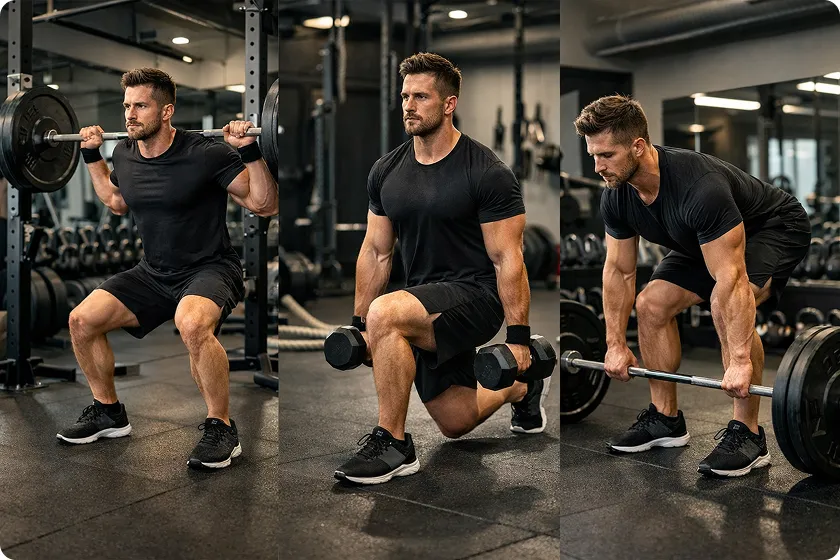
Many people dread “leg day” because they associate it with soreness or complicated routines, yet neglecting your lower body denies you the benefits of strong, powerful legs. Without regular leg day exercises, everyday tasks such as climbing stairs, carrying groceries, or playing sports become harder. Leg workouts help you develop strength, balance, and resilience because your legs house some of your body’s largest muscles.
In this guide, we outline ten proven moves, from body‑weight drills to leg exercises with weights. We highlight options for beginners and lower-body exercises for women, and answer questions like how to build leg muscles, how many exercises to do on leg day, and how many leg days you need per week. A well‑planned leg session improves posture, powers your favourite sports, and helps you stand taller. Correcting imbalances with leg muscle exercises lowers injury risk and supports daily activities. Whether your goal is to increase leg muscle or move without pain, this article offers evidence‑based guidance to get you started.
Why This Topic Matters
Leg strength influences more than you might think. When your lower body is strong, everyday movements feel effortless, and your health improves. We explore why leg training is essential, how it affects daily life, and debunk myths that keep people from training.

Strong Legs for Everyday Life
Your legs support you every time you sit, stand, walk, or run. Without adequate strength in your quads, hamstrings, and glutes, simple tasks become tiring, and your balance suffers. Regular leg strength training improves mobility and posture, so everyday movements feel effortless.
Legs and Long‑Term Health
Powerful legs support heart, brain, and bone health. Weight‑bearing lower-body gym exercises stimulate hormones and neural pathways across your body and may enhance memory. Leg-weight workouts and leg-muscle training reduce injuries.
Myths About Leg Day
Many think leg training requires dozens of movements or is only for athletes. In reality, a few compound lifts done consistently are enough, and women can safely perform leg exercises with weights to build lean muscle. A balanced strength training leg workout dispels these myths.
Core Strategy: 10 Proven Leg Day Exercises
A solid leg programme pairs a warm‑up with a mix of compound and accessory movements. Spend 5–10 minutes on light cardio and dynamic stretches, then choose three to six of the leg day exercises below and perform 2–3 sets of 8–12 reps with at least 48 hours between sessions. Progress by adding weight or trying single‑leg variations; these ten movements teach you how to build leg muscles efficiently.
1. Compound Movements
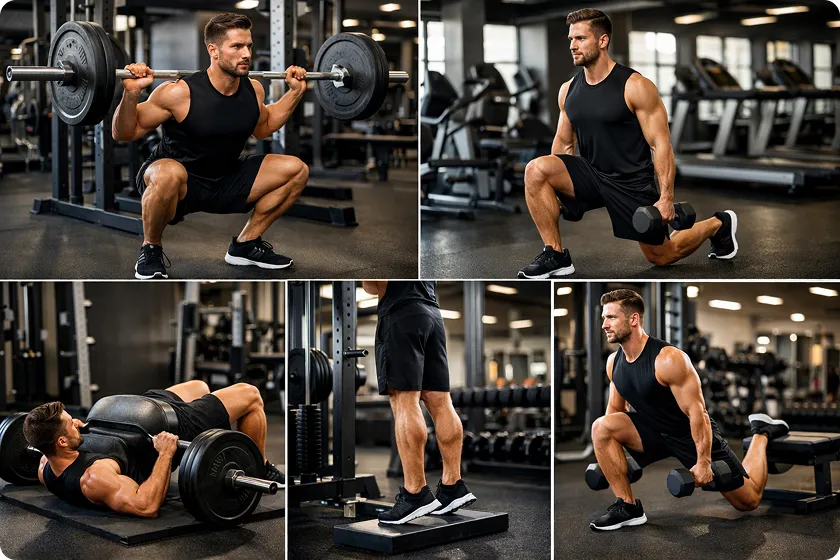
These leg day exercises recruit multiple muscles and improve core stability. Add squats, lunges, and Romanian deadlifts to your leg-lifting routine to build a strong foundation.
- Squat: An essential leg day exercise where you stand with feet hip‑width apart, squat until thighs are parallel, and rise.
- Lunge: A core leg day exercise; step forward or backward, bend both knees until your front thigh is parallel, and return.
- Romanian Deadlift: This leg day exercise starts with a slight knee bend; hinge at your hips, lower a weight toward your shins, and stand again.
2. Single‑Leg & Accessory Exercises
These leg day exercises address imbalances and strengthen supporting muscles. Step-ups, glute bridges, and calf raises build balance and ankle strength, making them ideal leg exercises for beginners. Add them to improve coordination.
- Step‑Up: A must‑do leg day exercise; place one foot on a step, drive through it to lift yourself, and lower with control.
- Glute Bridge: This leg day exercise involves lying with your knees bent, lifting your hips until your body forms a straight line, then lowering slowly.
- Calf Raise: This leg day exercise involves standing with your feet hip-width apart, raising your heels to the toes, then lowering them gradually.
3. Machine & Isolation Exercises
These leg day exercises let you lift heavy safely and target specific muscles. Leg presses and Bulgarian split squats build power and stability, while leg extensions and hamstring curls isolate the front and back of your legs. Use them to round out your training.
- Leg Press: A staple leg day exercise; sit on the machine, press the platform until your legs are almost straight, then lower until your knees are bent about 90°.
- Hamstring Curl: This leg day exercise, performed on a machine or a ball, involves curling your heels toward your glutes and lowering them slowly.
- Leg Extension: This leg day exercise uses a machine; extend your legs until almost straight and lower with control.
- Bulgarian Split Squat: A challenging leg day exercise; place one foot on a bench behind you, lower until your front thigh is parallel, and return.
Table 1: Key exercises at a glance
| Exercise | Main muscles | Equipment |
|---|---|---|
| Squat | Quads, glutes | Body weight or barbell |
| Lunge | Quads, glutes | Body weight or dumbbell |
| Romanian deadlift | Hamstrings | Dumbbells or barbell |
| Step‑up | Glutes, quads | Step or bench |
| Glute bridge | Glutes & core | Body weight |
| Calf raise | Calves | Body weight or dumbbells |
| Leg press | Quads, glutes | Machine |
| Hamstring curl | Hamstrings | Machine/ball |
| Leg extension | Quads | Machine |
| Bulgarian split squat | Quads & glutes | Bench/dumbbells |
Supportive Habits & Tools
Smart habits improve the results of your leg day workouts. A proper warm‑up prepares your muscles for heavy loads, while balanced nutrition and a realistic schedule help your leg muscle exercises translate into stronger legs and let you decide how many leg days a week you need. These supportive tools ensure each workout counts, and you stay consistent.

4. Warm‑Up and Mobility
Do 5–10 minutes of light exercise to warm up your heart and muscles before doing dynamic drills like walking lunges, hip circles, and leg swings. These drills improve circulation and reduce the risk of injury. See our warm‑up guide for a whole routine.
5. Nutrition and Recovery
Consume complex carbs, lean proteins, and healthy fats; stay hydrated; and get seven to nine hours of sleep. Gentle stretching or walking on rest days promotes circulation and supports muscle recovery. See our nutrition for recovery article for meal ideas.
6. Scheduling and Consistency
Consistency matters more than intensity. Start with one leg session per week and gradually add a second, leaving at least 48 hours between workouts—master form before adding weight to ensure progress. See our full‑body strength workout for more.
Table 2: Sample weekly plan
| Level | Sessions/week | Ex/session | Sets × reps | Rest |
|---|---|---|---|---|
| Beginner | 1–2 | 3–4 | 2–3 × 8–12 | 60–90 s |
| Intermediate | 2 | 4–5 | 3–4 × 8–12 | 60–90 s |
| Advanced | 2–3 | 5–6 | 4 × 6–10 | 90–120 s |
FAQ
1. What is leg day, and why is it important?
If you’re wondering what leg day is, it’s a workout that targets your lower body with compound moves like squats, lunges, and deadlifts, plus smaller drills. Training these big muscles burns calories, improves balance and posture, and boosts metabolism. A regular leg day also supports joint and bone health.
2. How many exercises should I do on leg day?
Howmany exercises for leg day? Aim for three to six moves; pick two or three big lifts, such as squats, deadlifts, or leg presses, and one or two smaller drills, such as calf raises. Quality beats quantity—master body‑weight versions first.
3. How many leg days a week do I need?
If you’re asking how many leg days a week, beginners need one session. Add a second as you adapt and keep at least 48 hours between workouts. Advanced lifters may include a third day for accessory or mobility work, depending on recovery.
4. How can I strengthen my legs at home?
How do Iimprove my legs at home? Do body‑weight squats, lunges, step‑ups, glute bridges, and calf raises, and make them more complicated with single‑leg versions, extra reps, or household weights. Two or three sessions per week, plus good nutrition support, progress.
Conclusion
Training your lower body is simple when you focus on the ten leg day exercises outlined here. These leg day exercises work every major muscle group and adapt to any fitness level, whether you choose body‑weight drills or weight-based leg exercises. Combine them with proper warm-ups, balanced nutrition, and a sensible schedule to improve strength, mobility, and overall health. Share this guide and explore our other resources to keep progressing. Strong legs support a strong life—start building yours today.
Internal Links:
- Gym Workout Routine for Men: 9 Effective Strength Training Tips
- Upper Body Workout for Men: 7 Essential Moves for Strength and Shape
- Daily Exercise Routine: 7 Full Body Workouts at Home