
Gym Workout Routine for Men: 9 Effective Strength Training Tips
Gym workout routine for men made simple. Build muscle with a full body strength training workout and practical tips for faster results. Start your plan today.
By Healthy Eats Guide Team
Published
Updated
15 min read
Introduction
Choosing a gym workout routine for men can feel overwhelming, especially with so many opinions, videos, and fitness plans circulating online. If you're just starting or returning after a break, it’s easy to feel unsure about where to begin. And if you’ve already been training for a while but aren’t seeing the results you expected, you might wonder whether your exercise approach is missing something important.

In this guide, we’ll walk through nine expert-level yet easy-to-follow tips for creating a full body strength training workout that works for real life. You’ll learn how to organize your sessions, choose the right movements, balance rest and intensity, fuel your body, and avoid the common mistakes that slow many men down. This is not about complicated routines or extreme training expectations—it's about building a smart, sustainable, and science-based approach you can actually follow.
Let’s dive into the principles that make a full body workout plan for men truly effective.
1. Start With a Structured Full Body
Many men begin working out without a clear plan. They jump from machine to machine or follow routines they find online without understanding whether the structure fits their goals. A full body strength training workout gives you an organized starting point that trains all major muscle groups evenly and consistently. This approach helps build balanced strength, improves metabolism, and supports long-term progress.

Before you worry about lifting heavy or building aesthetic muscles, a full body routine establishes the foundation you need. It's perfect for beginners, returning lifters, and even advanced men seeking efficiency. A structured plan helps avoid randomness and ensures every session has a purpose.
Let’s explore why starting with full body training is such a powerful choice.
1.1 Why Full Body Training Works for Most Men
A full body routine targets every major muscle group in a single session. It encourages balanced growth, prevents strength imbalances, and promotes muscle recovery by giving each area enough time to rest between workouts.
Additionally, this type of routine allows beginners to practice basic movement patterns—pushing, pulling, squatting, hinging, and carrying—without overwhelming complexity. It's also ideal for men with unpredictable schedules who can’t always commit to four or five training days a week.
Full body training supports:
- Increased calorie burn
- Improved hormonal responses
- Efficient use of gym time
- More frequent muscle stimulation
The result? Faster strength development and better overall fitness.
1.2 Core Principles of an Effective Exercise Plan to Build Muscle
Every good exercise plan to build muscle follows the same core concepts. Whether you're aiming to build muscle mass or simply tone your body, these principles make any routine successful.
Strong routines include:
-
Compound lifts that work several muscles simultaneously
-
Progressive overload, meaning gradually increasing training difficulty
-
Balanced push–pull movements for improved posture
-
Adequate rest, preventing overtraining while supporting muscle repair
-
Proper form, reducing injury risk and improving activation
When your plan includes these pillars, you build a strong foundation for long-term gains.
1.3 How Many Days a Week Should You Train?
Training frequency depends on your fitness level, schedule, and goals. But for most men, a 3 day a week workout plan is the ideal balance between effort and recovery.
Here's a helpful guideline:
-
Beginners — 2–3 days
-
Intermediate lifters — 3–4 days
-
Advanced lifters — 4–5 days
A three-day routine gives your muscles 48 hours of rest, which research shows is optimal for both strength and hypertrophy. It’s also far more sustainable than working out daily, especially if you’re juggling school, work, or family.
2. Follow a Consistent Full Body Workout Plan for Men
Once you understand the value of full body training, it's time to create a consistent plan that suits your lifestyle. Consistency is what transforms your gym habits into real results. A full body workout plan for men works best when followed regularly and adjusted realistically.

Following a plan helps reduce decision fatigue at the gym. It keeps you focused, ensures each muscle group receives proper attention, and allows you to track progress over time. Even small changes—like an extra rep or slightly better form—become easier to measure when your training isn’t random.
2.1 The Ideal Training Sequence for Strength and Muscle
The order of your exercises matters. You’ll see better results if you train large muscle groups first and finish with smaller, isolation-focused work.
Here’s the recommended sequence for most men:
-
Warmup: Dynamic movements, light cardio
-
Compound lifts: Squats, deadlifts, bench press, rows
-
Assistance exercises: Lunges, incline presses, Romanian deadlifts
-
Isolation work: Biceps, triceps, shoulders, calves
-
Core training: Planks, leg raises, cable crunches
-
Cool-down and stretching
This structure ensures your biggest, most demanding exercises receive the most energy and attention.
2.2 Workout Splits vs. Full Body: Which Is Better?
Some men wonder if they should switch to an upper-lower split or push–pull–legs routine. While these plans work well for intermediate and advanced lifters, full body routines often outperform them for beginners.
Full body routines are better for:
- Learning form
- Building foundational strength
- Maximizing weekly muscle stimulation
- Saving time
- Maintaining motivation
Splits are useful later, once your technique is solid and your body has adapted to larger training volumes.
2.3 Sample Weekly Gym Exercise Schedule for Men
Below is a simple example of a gym exercise schedule for men using full body training principles:
| Day | Workout Focus | Notes |
|---|---|---|
| Monday | Full Body Strength | Heavy compound lifts |
| Wednesday | Full Body Moderate | Moderate intensity + isolation |
| Friday | Full Body Power | Explosive movements + strength |
Table 1. Weekly Gym Exercise Schedule for Men
This schedule supports recovery, consistency, and balanced training. You can adjust intensity based on your goals—heavier loads for muscle gain, lighter weights with higher reps for endurance or toning.
3. Master Proper Form Before Increasing Weight
Good form is the foundation of all strength training. When men jump to heavy weights too soon, the risk of injuries rises significantly. Perfecting your technique allows your muscles to activate correctly, ensures safer training, and supports long-term progress.

Proper form also builds confidence. When you know exactly how to perform each movement, you eliminate the fear of injury or embarrassment in the gym. A strong foundation in technique sets you up for heavier, more effective training later.
Let’s explore why form matters so much.
3.1 The Importance of Form for Long-Term Muscle Growth
When form is correct, your muscles work as they should. This means each rep stimulates the right muscle fibers, making your training more productive. Proper form also helps maintain joint health—a critical factor as you age.
Some benefits include:
-
Better range of motion
-
Improved muscle activation
-
Reduced risk of injury
-
More consistent long-term results
Mastering form first ensures you build muscle safely and efficiently.
3.2 Common Mistakes to Avoid
Beginners often fall into the same training mistakes—most of which come from rushing or ego lifting. Some of the most common issues are:
- Lifting too heavy too soon
- Shortening the range of motion
- Using momentum instead of muscle strength
- Poor breathing technique
Correcting these errors early prevents setbacks and frustration.
3.3 How to Progress Safely Using a Full Body Weight Lifting Workout
In a full body weight lifting workout, you should increase weight gradually. A safe rule is the 5% principle: increase weight by about 5% only when you can complete all reps with good form.
Other ways to progress safely include:
-
Adding 1–2 reps
-
Slowing the tempo
-
Improving consistency
-
Increasing sets strategically
Remember, quality always comes before quantity.
4. Choose Compound Exercises as the Foundation
Without compound exercises, a program becomes unbalanced. You risk overworking small muscles while neglecting the larger groups that drive real progress.
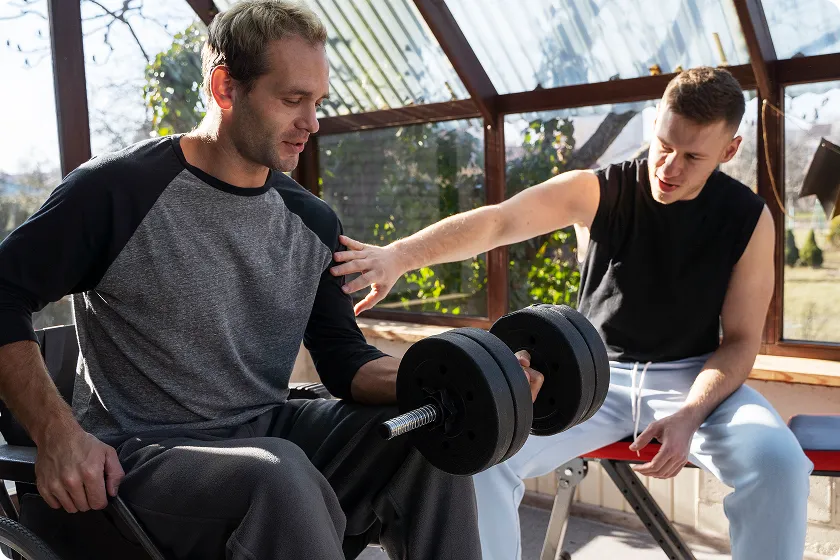
Let’s look at why these exercises should anchor your routine.
4.1 Why Compound Movements Build Muscle Faster
Compound movements stimulate the greatest hormonal response, which supports muscle building. They also improve functional strength—strength you can use in everyday life.
Benefits include:
-
Higher calorie burn
-
Improved coordination
-
Greater strength gains
-
Balanced muscle development
Because these exercises demand more energy, they should always come first.
4.2 Best Compound Lifts for Men
These movements should form the core of your training:
- Squats
- Deadlifts
- Bench Press
- Bent-Over Rows
- Pull-Ups
- Overhead Press
Mastering these lifts builds a powerful, athletic body.
4.3 How to Use Compound Lifts in a Strength Training for Toned Body Routine
If your goal is to tone your body rather than bulk up, compound lifts still play a crucial role. The difference lies in intensity and volume.
For toning:
-
Use moderate weights
-
Increase repetitions
-
Reduce rest time
-
Maintain controlled movement
This keeps your heart rate elevated while shaping lean muscle.
5. Incorporate Isolation Exercises Strategically
Isolation exercises target one muscle at a time. While they shouldn’t replace compound lifts, they help enhance muscle definition and correct weaknesses. The key is using them strategically so they complement your full body routine without adding unnecessary fatigue.

Most men want stronger arms, shoulders, and chest definition—areas where isolation exercises can make a noticeable difference.
Let’s explore how they fit into your plan.
5.1 When Isolation Exercises Matter Most
Isolation exercises are ideal when:
-
You want to improve specific muscle groups
-
You’re strengthening imbalances
-
You're focusing on aesthetics
-
You want extra volume without taxing your nervous system
They're especially useful for beginners learning to activate muscles correctly.
5.2 Top Isolation Moves for Aesthetic Results
Some of the best isolation exercises include:
- Bicep curls
- Tricep extensions
- Lateral raises
- Hamstring curls
- Calf raises
- Chest flyes
Use light-to-moderate weights and controlled movement for best results.
5.3 Balancing Isolation Work in a Full Body Routine
In a full body exercise routine for beginners, isolation work should be minimal but intentional.
A simple structure is:
-
1–2 isolation exercises per session
-
10–15 reps
-
2–3 sets
This supports muscle development without exhausting you.
6. Train With Progressive Overload
Progressive overload is the principle that builds strength and muscle over time. It means consistently challenging your body to do slightly more than before. Without it, even the best routines eventually stop working.

This does not mean lifting heavy weights every single session. Overload can be applied in multiple ways.
6.1 What Progressive Overload Really Means
True progressive overload includes:
-
Increasing weight
-
Adding more reps
-
Adding more sets
-
Decreasing rest time
-
Improving technique
-
Increasing range of motion
The goal is steady, gradual improvement.
6.2 Forms of Overload Beyond Weight
You don't always have to lift heavier to progress. Sometimes improving form or slowing down tempo creates more muscle tension and enhances results. You can also challenge yourself by changing grip, stance, or exercise variations.
This is especially important during a strength training program for beginners, where technique matters more than load.
6.3 Safe Progression for Beginners
Beginners should prioritize:
-
Slight increases in reps
-
Controlled movement
-
Gradual weight increases
-
Enough rest
-
Avoiding failure training
This supports consistent gains without burnout.
7. Support Your Gym Workout Routine With Proper Recovery
Recovery is just as important as training. Without adequate rest, your body can't repair muscle fibers or build new tissue. Many men overlook this step and end up tired, frustrated, and stuck.

Proper recovery includes rest days, nutrition, sleep, and managing stress. These habits help you feel stronger, recover faster, and reduce injury risk.
7.1 Why Rest Days Are Essential
Muscles grow when you rest—not when you train. Taking rest days prevents overtraining, reduces inflammation, and supports better long-term progress.
Signs you need more rest include:
-
Constant fatigue
-
Persistent soreness
-
Reduced performance
-
Irritability
Listen to your body and prioritize recovery.
7.2 Sleep, Stretching, and Mobility
Three essential elements of recovery include:
-
Sleep: Aim for 7–9 hours
-
Stretching: Helps prevent tightness and improves mobility
-
Active recovery: Light walking, cycling, or yoga
Even 10 minutes of stretching after workouts can dramatically improve performance.
7.3 How to Know You’re Overtraining
Overtraining can derail your progress. Warning signs include:
-
Lack of motivation
-
Plateauing strength
-
Poor sleep
-
Lower immunity
If you notice these symptoms, scale back temporarily.
8. Fuel Your Body for Muscle Growth
A well-balanced diet makes training easier, helps maintain energy, and supports better recovery.

8.1 Macronutrients for Performance
Your diet should emphasize:
-
Protein: For muscle repair
-
Carbohydrates: For energy
-
Healthy fats: For hormone support
Aim for balanced meals with whole foods like lean meats, eggs, beans, rice, potatoes, and vegetables.
8.2 Pre- and Post-Workout Nutrition
Before workouts:
-
Eat a balanced meal 1–2 hours before
-
Include carbs + protein
-
Avoid heavy, greasy foods
After workouts:
-
Eat within 2 hours
-
Prioritize protein
-
Add carbs to replenish energy
Examples include chicken and rice, Greek yogurt with fruit, or eggs and whole wheat toast.
9. Track Your Progress and Adjust Your Plan
Even simple tracking can help you stay consistent.

9.1 Measuring Results the Right Way
Look beyond the scale. Use:
-
Progress photos
-
Strength increases
-
Energy levels
-
How clothes fit
Real progress happens slowly, so measure over weeks—not just days.
9.2 When to Change Your Workout
Change your routine if:
-
You stop seeing progress
-
You feel bored
-
You’ve plateaued
-
You mastered your current routine
Most men benefit from adjusting their plan every 6–8 weeks.
9.3 Signs Your Plan Is Working
You’ll know your routine is effective when:
-
You're lifting heavier
-
Your stamina improves
-
You feel energized
-
Muscles look more defined
Small, steady improvements add up.
FAQs
1. What is a full body workout plan for men?
A full body workout plan for men is a training routine that targets all major muscle groups in a single session. It typically includes compound movements like squats, deadlifts, bench presses, and rows. This type of routine is efficient, effective for muscle building, and ideal for both beginners and experienced lifters looking for balanced development.
2. What is a weight lifting program for men?
A weight lifting program for men is a structured plan that outlines exercises, sets, reps, and progression for building muscle and strength. It usually combines compound and isolation movements and follows principles like progressive overload, proper recovery, and balanced training frequency.
3. What is a full body workout routine for men?
A full body workout routine for men is a training schedule that includes movements working legs, chest, back, shoulders, arms, and core in each workout. Most routines range from 2–4 days per week and help beginners master form while promoting steady strength gains.
4. What is a gym workout plan for men?
A gym workout plan for men outlines the exact exercises to complete during each session, ensuring balanced training for all muscle groups. It can be a full body routine, an upper-lower split, or a push–pull–legs program depending on experience level and fitness goals.
5. How to create a workout plan to build muscle?
To create a workout plan to build muscle, include compound lifts, isolation exercises, progressive overload, and consistent training frequency. Plan 3–4 weekly sessions, use a structured exercise order, and support training with proper nutrition, sleep, and hydration. Gradually increase intensity over time to see continuous muscle growth.
Conclusion
Building an effective gym workout routine for men doesn’t have to be complicated. With a clear structure, proper form, and a focus on full body training, you can develop a routine that builds strength, improves fitness, and supports long-term health. Whether your goal is to tone your body, gain muscle, or simply feel stronger, combining a well-designed exercise plan to build muscle with consistency and smart recovery habits leads to real, lasting results.
Remember to choose compound exercises, use isolation movements wisely, and fuel your body with balanced nutrition. Use progressive overload to stay challenged, track your improvements, and adjust your routine as needed. Your fitness journey is personal, and small steps taken consistently can transform your body and confidence.
Whenever you're ready, revisit the Table of Contents to explore any section you want to apply today. You’ve got everything you need to start strong and stay strong.
Internal Links:
- Upper Body Workout for Men: 7 Essential Moves for Strength and Shape
- Daily Exercise Routine: 7 Full Body Workouts at Home
- Smart Metabolism Tracking Devices in 2025
External Links:
About the author
Healthy Eats Guide Team
Editorial Team
The Healthy Eats Guide editorial team researches and writes practical health and wellness content focused on clarity, sourcing, and everyday usefulness.
Related blogs

Recreational Soccer Benefits: 7 Reasons to Play Today
Recreational soccer benefits boost heart fitness, soccer body composition, and bone strength. Discover seven reasons to play and start today!
9 min read

Exercise for Endorphins: 7 Proven Ways to Boost Happiness
Exercise for endorphins boosts mood naturally with physical exercise and happiness tips, stress relief strategies, and fitness benefits. Learn proven ways today.
8 min read

Workout Plan to Lose Weight: 8 Effective Workout Exercises
Workout plan to lose weight with 8 effective exercises, cardio, and weights. Follow this weight loss training plan to burn fat and start today!
10 min read
Newsletter
Get practical health guides in your inbox
Occasional updates with clear nutrition, habits, and wellness reading — no spam, unsubscribe anytime.