
How Many Ounces of Water Do You Need a Day? Key Facts You Must Know
Wondering how many ounces of water do you need a day? Learn the recommended daily water intake for teens, women, and more. Find out how much water you should drink now!
By Healthy Eats Guide Team
Published
Updated
9 min read
Introduction
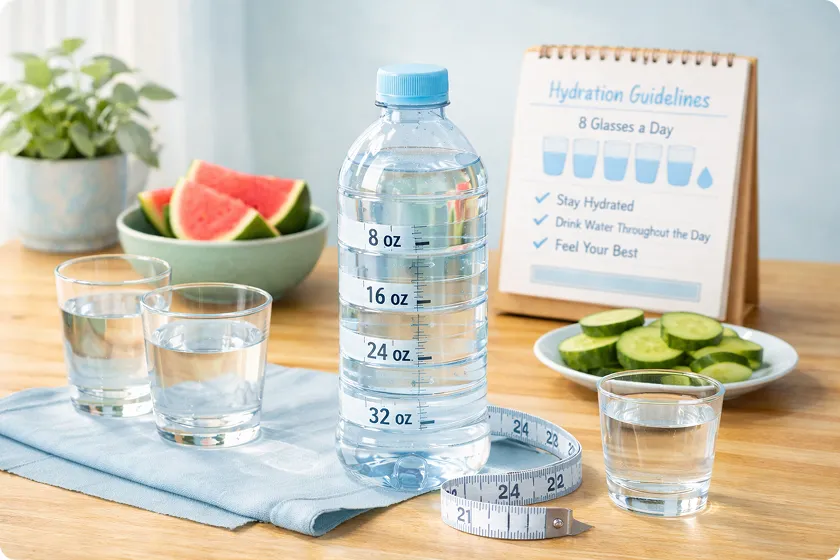
Many people wonder how many ounces of water they need a day. Some follow the eight‑glass rule while others tote gallon jugs. Hydration fuels the brain, cushions joints, and keeps organs working. If you’re not sure how many ounces of water you need a day, you’re not alone; many search for how much water you should u drink per day. This guide explains how many ounces of water do you need a day.
Why This Topic Matters
More than half of your body is water, and mild dehydration can cause headaches, fatigue, cramps, and mood swings. Whenever you ask yourself how many ounces of water you need a day, remember that hydration supports digestion, circulation, skin health, and cognition. Is 80 oz of water a day enough? We’ll cover that too.

Hydration and Your Health
Water regulates temperature, transports nutrients, and cushions organs. When you’re adequately hydrated, you think more clearly, your muscles cramp less, and your skin looks better. Drink regularly rather than waiting until you’re thirsty, and watch your urine color—pale yellow usually means you’re on track.
Myths and Misconceptions
The “eight glasses a day” guideline doesn’t fit everyone. A common misconception is that there’s a single answer for how many ounces of water you need a day, but your needs depend on age, size, activity, and climate. Coffee and tea count toward hydration despite mild diuretic effects, but sugary sodas and alcohol can dehydrate you. There is no magic number; guidelines offer a starting point.
Consequences of Too Little Water
Dehydration can happen quickly. Early signs include dark urine, dry mouth, and headaches. Severe cases lead to dizziness or confusion. Kids, teens, and older adults may not feel thirsty until they’re already dehydrated. Not understanding how many ounces of water you need a day can leave you drinking too little. Drinking steadily throughout the day prevents these issues.
Core Strategies / Action Steps
Determining how many ounces of water you need a day involves following science‑based recommendations and adapting them to your life. The following steps will help you calculate how many ounces of water you need a day and adjust as your circumstances change. Revisit these steps whenever you’re unsure how many ounces of water you need a day.
1. Understand Official Guidelines by Age and Sex
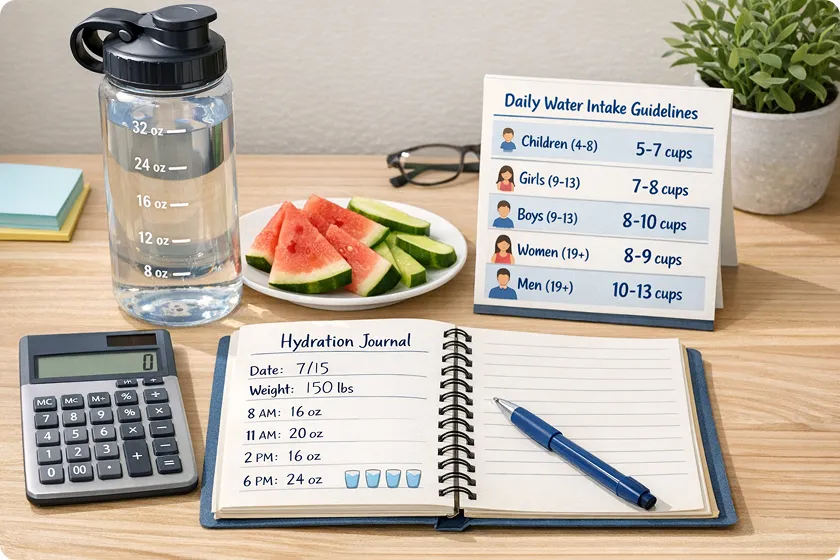
Public health organizations recommend about 13 cups (104 oz) of fluid per day for men and 9 cups (72 oz) for women. Pregnant women need roughly 10 cups (80 oz). Breastfeeding women also require about 13 cups (104 oz), and teens generally need 64–88 oz. These totals include all beverages and water‑rich foods and give a starting point for how many ounces of water you need a day.
Table 1 – Water intake guidelines by group
| Group | Cups/day | Ounces/day |
|---|---|---|
| Teens (14–18 y) | 8–11 | 64–88 |
| Men (≥19 y) | 13 | 104 |
| Women (≥19 y) | 9 | 72 |
| Pregnant | 10 | 80 |
2. Calculate Your Personalized Needs
Charts are helpful, but your body might need more or fewer of them. A quick method is to drink half your body weight in ounces—if you weigh 150 pounds, aim for 75 oz; at 200 pounds, shoot for 100 oz. This calculation helps answer how many ounces of water I should drink a day. To track easily, ask yourself how many bottles of water you should drink a day. A typical bottle holds 16.9 oz, so four to six bottles cover most goals. Pale urine and steady energy levels indicate you’re on track.
3. Adjust for Lifestyle Factors
Exercise, heat, and illness increase fluid needs. Drink 17–20 oz two to three hours before activity, 8 oz right before, and 8–12 oz every 30 minutes during your workout. On hot days, add 16–24 oz to your daily total. If you’re sick, increase your intake and consider electrolyte drinks. Your environment and activity level change how many ounces of water you need a day; adjust accordingly. People often ask, “Is 80 oz of water a day enough?” For many women and smaller men, it is. Larger or highly active individuals may need more.
Supportive Habits & Tools
Knowing how many ounces of water you need a day isn’t enough—you must turn that number into a routine. These habits and tools will help you hit your target and keep hydration effortless.
Daily Hydration Habits
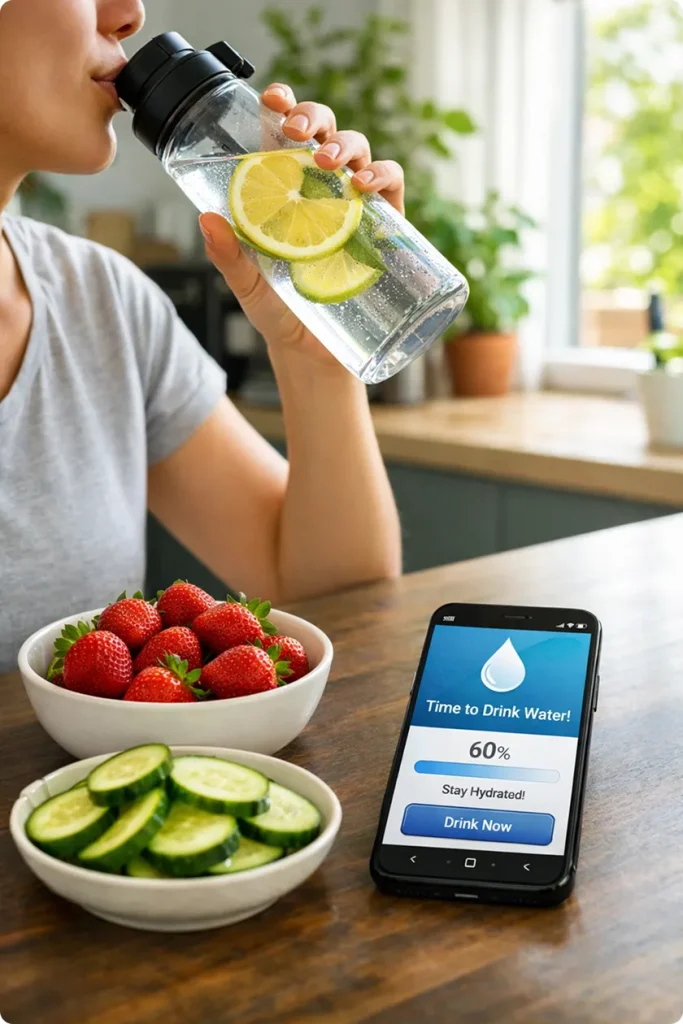
If you don’t know how many ounces of water you need a day, these habits can keep you hydrated:
- Start early and sip often. Drink water when you wake up and throughout the day.
- Carry a flavoured bottle. Keep a reusable bottle with lemon or cucumber in it.
Eat Hydrating Foods
About one‑fifth of your fluid comes from food, so choose produce with high water content. Cucumber, celery, lettuce, tomatoes, and watermelon contain more than 90% water, and strawberries contain about 92%. Including these foods helps you hydrate and complements the number of ounces of water you need a day. Hydrating foods count toward your intake and reduce the number of ounces of water you need from drinks.
Table 2 – Water content of common hydrating foods
| Food | Water content (%) | Serving ideas |
|---|---|---|
| Cucumber | ~96 % | Add to salads or infuse water. |
| Celery | ~95 % | Enjoy with hummus or peanut butter. |
| Tomatoes | ~95 % | Add to sandwiches or salsa. |
| Watermelon | ~92 % | Eat wedges or blend into smoothies. |
Tools to Track and Optimize Hydration
Use a bottle marked in ounces that divides into your goal. Hydration apps send reminders and log your intake. Keep water accessible—on your desk, in your bag, and in the car—so you never have to look far for a drink. These simple tools make it easier to determine how many ounces of water you need a day without overthinking.
Frequently Asked Questions
1. How many ounces of water do you need a day?
Guidelines suggest about 104 oz for men and 72 oz for women, including water from all beverages and food. The half‑your‑body‑weight rule personalizes how many ounces of water do you need a day, and it answers how much water should I drink a day in oz. Pale urine and steady energy mean you’re on track; people who sweat a lot or exercise more should aim higher. Many ask the same question: how many ounces should you drink a day, how many oz of water should you drink a day, or how many oz of water should I drink a day—all refer to the same guideline.
2. Is 64 oz of water a day enough?
When people ask whether 64 oz is enough, they’re really asking how many cups is 64 oz of water. Since one cup equals 8 oz, 64 oz equals eight cups. It suits sedentary adults, but many men and active women need 80–100 oz. Adjust if your urine is dark or if you feel thirsty.
3. How many bottles of water should I drink a day?
A single‑serve bottle holds about 16.9 oz. To determine how many ounces of water you need each day, women need roughly 4 bottles and men about 6. With a 20‑oz bottle, divide your target by 20 to see how many refills you need.
4. How much water should a woman drink a day?
Most women need around 72 oz per day. People often ask how much water women should drink a day; aim for 72 oz and adjust to 80–104 oz if pregnant or breastfeeding.
5. How much water should a teenager drink a day?
Teen girls aged 14–18 generally need 64–80 oz, while boys the same age need 72–88 oz. Sports or hot weather increase the amount of water you need each day, so teens should drink before and after exercise. Carrying a bottle and sipping regularly makes it easier to meet these targets.
Conclusion
Knowing how many ounces of water you need a day is a simple yet powerful way to improve health. Stop wondering how much water you should u drink per day—these guidelines make it clear: about 104 oz for men and 72 oz for women. If you’re wondering if 80 oz of water a day is enough, the answer is yes for many women and smaller men.
These guidelines also clarify how much water a woman should drink each day and reinforce the number of ounces she needs so that you can tailor your intake confidently. Use the half‑your‑body‑weight rule and adjust for exercise and weather. Remember that foods contribute to hydration, and watch your urine color. Share this guide and explore our related posts.
Internal Links:
- 10 Foods That Cause Constipation
- What is Constipation? How Your Diet Impacts Bowel Health
- 10 Essential Whole Foods List for a Healthier Lifestyle
External Links:
About the author
Healthy Eats Guide Team
Editorial Team
The Healthy Eats Guide editorial team researches and writes practical health and wellness content focused on clarity, sourcing, and everyday usefulness.
Related blogs

Heart Failure Diet: 10 Essential Foods for Better Heart Health
Heart failure diet: Discover 10 essential foods and a heart healthy meal plan to support circulation, reduce strain, and protect your heart. Start today.
15 min read

Best Diet for Arthritis: 7 Essential Foods for Joint Health
Best diet for arthritis: foods for joint health and foods that help arthritis. Improve mobility and reduce pain. Start reading today.
8 min read

Anti-Inflammatory Snacks: 10 Proven Fruits for Inflammation
Anti-inflammatory snacks with fruits for inflammation and foods that are anti inflammatory. Discover a low inflammatory breakfast guide and boost health now.
11 min read
Newsletter
Get practical health guides in your inbox
Occasional updates with clear nutrition, habits, and wellness reading — no spam, unsubscribe anytime.